
Retina & Vitreous Disorders
The retina is the light-receptive screen at the back of the eye that sends visual messages to the brain. Retinal detachments are caused by a host of conditions. Rhegmatogenous detachment — caused by retinal tears or breaks — is the most common type.
The vitreous is a clear, gel-like substance filling the space between the lens and the retina. It can become opaque due to bleeding from injury, diabetes, and other conditions, causing vision problems.
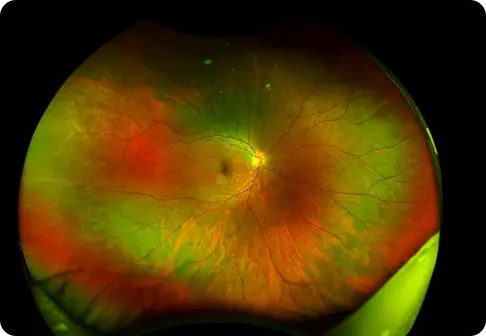
Risk Factors
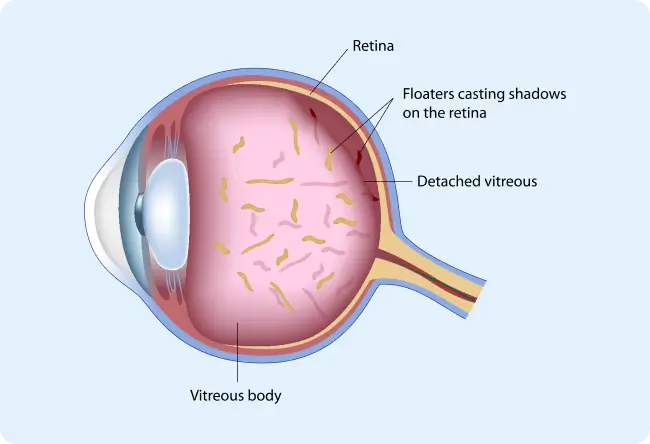
Symptoms
Treatment
Laser indirect ophthalmoscopy — Seals retinal hole or break with laser to prevent detachment.
Cryopexy — Freezes the area around the hole to reattach the retina.
Pneumoretinopexy — Air is injected to push the retina back against the wall of the eye.
Scleral buckling — A buckle on the outside of the eye pushes the wall against the detached retina.
Vitrectomy — Vitreous removed partly or totally via small scleral incision. Gas injected to flatten the retina.
Over 90% of retinal detachments can be successfully treated when caught early.
